How Much Does Door Replacement Cost in 2026?
How Much Does Door Replacement Cost?
The average door replacement cost ranges from $150 to $1,800 per door, including both materials and professional labor. A basic hollow-core interior door replacement typically costs $200 to $600, while replacing a standard exterior front door ranges from $500 to $2,500 depending on the material.
High-end architectural upgrades carry higher price tags: sliding patio doors average $1,025 to $4,155, and elegant interior or exterior French doors generally range between $600 and $5,500. Total costs depend heavily on whether you are replacing a simple door slab or installing a full pre-hung system with a new frame.
Complete Door Replacement Cost Breakdown
To accurately budget for your next home improvement project, you must separate door types by their construction and application. The table below details standard market pricing, labor requirements, and installation complexities across the most common residential door categories.
| Door Type & Classification | Materials Only (Standard) | Labor & Installation Cost | Total Estimated Cost (Installed) | Project Complexity Level |
|---|---|---|---|---|
| Standard Interior Slab (Hollow Core) | $50 – $150 | $100 – $250 | $150 – $400 | Low (Fits existing frame) |
| Solid-Core Interior Door (Pre-Hung) | $150 – $450 | $150 – $350 | $300 – $800 | Moderate (Requires frame squaring) |
| Steel Exterior Entry Door | $250 – $800 | $300 – $700 | $550 – $1,500 | Moderate to High (Security & weatherproofing) |
| Fiberglass Exterior Entry Door | $400 – $1,500 | $350 – $800 | $750 – $2,300 | High (Thermal sealing required) |
| Premium Hardwood Front Door | $800 – $4,000+ | $400 – $1,200 | $1,200 – $5,200+ | Very High (Heavy, custom fitting) |
| Standard Sliding Glass Patio Door | $400 – $1,800 | $500 – $1,500 | $900 – $3,300 | High (Track alignment & flashing) |
| Interior French Doors (Double) | $400 – $1,500 | $300 – $700 | $700 – $2,200 | Moderate to High (Double-door alignment) |
| Exterior French Doors (Insulated) | $1,000 – $3,500 | $500 – $1,500 | $1,500 – $5,000 | High (Structural header check) |
Door Replacement Cost by Type, Size, and Region
Every opening in your home features unique structural requirements. Replacing a bedroom door is a fast, low-stakes cosmetic swap, whereas changing an exterior architectural boundary requires close attention to structural load-bearing limits, flashing, and local wind-load building codes.
Interior Door Replacement Costs
Mental health care pricing reflects local economic conditions, commercial real estate values, and regional concentrations of highly trained providers. If you reside in a major metropolitan area with an elevated cost of living, you will face vastly higher rates than couples seeking the same services in suburban or rural environments.
Hollow-Core Slab Doors ($150 – $400 Installed): These entry-level doors feature an inner cardboard honeycomb core wrapped in a thin wood veneer or molded composite skin. They are exceptionally lightweight and economical, making them the default option for standard closets and laundry rooms. However, they provide minimal acoustic dampening and can be easily punctured by accidental impacts.
Solid-Core Molded Doors ($300 – $800 Installed): These doors are filled with a dense wood fiber or particleboard mixture inside a molded outer skin. They mimic the heavy, premium feel of authentic solid wood at a significantly lower price point. Solid-core doors are highly recommended for bedrooms, home offices, and bathrooms due to their superior sound-blocking properties and high resistance to warping in humid environments.
Solid Hardwood Doors ($600 – $1,500+ Installed): Built entirely from solid wood planks (such as oak, maple, pine, or walnut), these premium architectural pieces feature beautiful grain patterns and excellent structural longevity. They are easily stained or painted but are susceptible to seasonal expanding or shrinking if your home experiences notable humidity shifts.
Exterior and Front Entry Door Replacement Costs
Your front entry door handles three major jobs: maximizing curb appeal, sealing out harsh drafts, and providing a reliable physical security barrier against forced entry. Because of these demanding requirements, material costs and structural installation complexities are much higher than interior alternatives.
Source: brennancorp.com
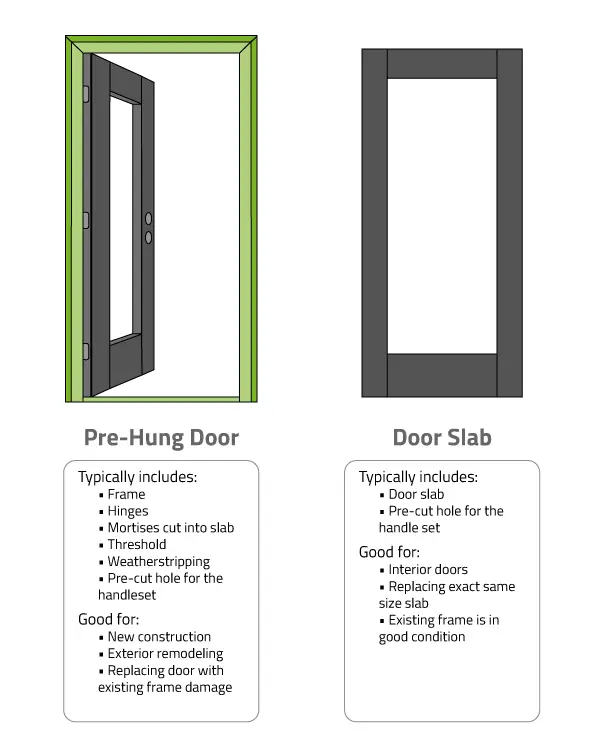
Pre-Hung vs. Slab Installs: As highlighted in the structural breakdown above, a Pre-Hung Door arrives pre-mounted within a complete frame system, including the hinges, weatherstripping, and threshold. This is necessary if your old wood frame is rotted, out of square, or structurally degraded. A Slab Door is just the raw door panel itself, requiring the installer to manually cut hinge mortises and bore lock holes to line up with your existing frame.
Standard Front Entries ($500 – $2,500): A basic, single-panel entry door measuring 36 inches by 80 inches made of steel or fiberglass fits easily into a standard rough opening, making installation fast and predictable.
Upgraded Entryways with Sidelights and Transoms ($2,500 – $7,000+): If your entryway features architectural glass flanking the sides (sidelights) or a decorative window overhead (transom), the entire structural framing group must be replaced as a single, ultra-heavy unit. This configuration often demands two or three carpenters to safely set, level, and anchor the frame, significantly increasing labor fees.
Sliding Glass Patio Door Replacement Costs
Sliding patio doors are large, multi-panel glass assemblies designed to maximize natural light and connect indoor living spaces to your backyard, deck, or patio.
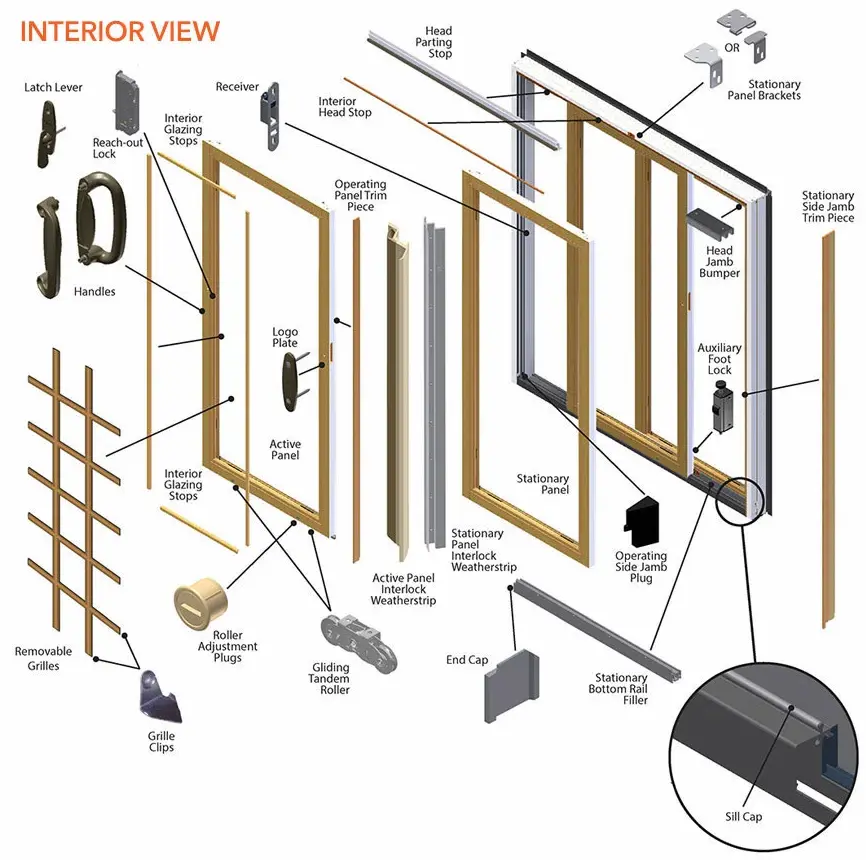
Standard 2-Panel Slider ($900 – $2,500 Installed): This classic setup features one fixed glass panel and one active operating panel that slides horizontally along a track. Frames are commonly manufactured from low-maintenance vinyl or durable aluminum.
3-Panel or Telescoping Multi-Slide Doors ($2,500 – $6,000+ Installed): For expansive modern openings, multi-slide or telescoping doors stack neatly on top of each other when opened. The structural framing must be perfectly straight and level; even a minor 1/16-inch sag in the overhead lintel header will cause the heavy glass panels to bind or jump off their tracks.
Source: aprodoor.com
Proper track alignment, high-performance tandem rollers, and robust interlocking weatherstripping are critical to keeping these large openings operational and energy-efficient over the long term.
French Door Replacement Costs
French doors feature double operating panels with multiple glass window lites extending across their length. They bring an elegant, traditional architectural aesthetic to any room or patio connection.
Interior French Doors ($700 – $2,200 Installed): Often used to enclose home offices, formal dining rooms, or master suites. Because they don’t require heavy weather seals, multi-point locks, or thick insulated glass, they are relatively straightforward to hang and align.
Exterior French Doors ($1,500 – $5,500 Installed): These exterior doors must be heavily sealed against rain and wind infiltration. They utilize tempered, double-pane or triple-pane insulated glass and heavy-duty multi-point locking systems that secure the doors into both the top header jamb and bottom sill threshold. Achieving a perfect, weather-tight center seal where the two active doors meet requires precise carpentry.
Impact of Door Dimensions on Total Cost
Standard residential doors across North America adhere to predictable sizing conventions, primarily standing 80 inches tall (6 feet, 8 inches) and ranging from 24 to 36 inches wide.
If your home dates back to the mid-20th century or features modern architectural custom designs, you may encounter non-standard rough openings. Upgrading to an 84-inch or 96-inch tall door (8 feet) instantly triggers custom factory fabrication, adding a 30% to 100% markup on the raw material cost. Furthermore, custom doors require tailored jamb extensions and custom-cut casing trim molding, extending the time your contractor spends on-site.
Regional Price Variations
Your geographic location directly influences localized labor rates and the specific code requirements your new door must satisfy.
High Cost-of-Living Urban Hubs (NYC, Seattle, San Francisco, Chicago): Expect professional carpenter labor rates to range from $90 to $150 per hour. A standard exterior door installation that takes 4 hours can easily incur $400 to $600 in raw labor fees alone.
Low Cost-of-Living Rural Regions: Labor rates scale down sharply to $45 to $85 per hour, lowering your overall installation costs.
Coastal Hurricane Zones (Florida, Gulf Coast, Long Island): Building codes mandate that all new exterior doors pass strict impact-resistance testing to withstand flying debris and high wind pressures. Installing an approved impact-rated door system with reinforced structural anchors and heavy-duty hinges can add $1,000 to $2,500 to your final project total.
Factors That Affect Your Total Door Replacement Cost
Understanding the hidden operational details behind a door installation quote will help you spot fair pricing and avoid unexpected hidden fees from your contractor.
Material Comparison: Wood vs. Fiberglass vs. Steel
The material you select for your new door slab dictates its long-term durability, regular maintenance schedule, thermal performance, and upfront pricing.
| Material | Cost/Segment | Primary Benefit | Drawback/Feature |
|---|---|---|---|
| Steel | Low Cost | Maximum Security | Dents |
| Fiberglass | Mid-High | Zero Rot | Low Maint |
| Wood | Premium | True Luxury | High Maint |
Steel Doors ($250 – $800 Materials Only): Steel is the most economical and high-security choice for residential exterior entries. Built with an inner wood or steel skeleton filled with dense polyurethane foam insulation, steel doors offer fantastic thermal efficiency. Their main downside is a vulnerability to cosmetic damage; heavy impacts can create permanent dents, and deep scratches will eventually rust if not promptly treated with primer and paint.
Fiberglass Doors ($400 – $1,500 Materials Only): Fiberglass is an exceptionally popular modern middle ground. It can be molded with deep, realistic faux-wood grain textures that beautifully mimic authentic stained oak or mahogany without any of the risks of wood rot, splitting, or warping. Fiberglass is highly resistant to coastal salt air and severe temperature swings, requiring virtually no long-term refinishing maintenance.
Authentic Wood Doors ($800 – $4,000+ Materials Only): Solid wood offers an unmatched premium look and substantial structural heft. However, it requires a dedicated commitment to long-term care. Wood entry doors must be resealed, varnished, or painted every 2 to 5 years to shield them from moisture damage, solar UV bleaching, and wood rot.
Labor and Structural Framing Complexity
A straightforward, textbook installation assumes your home’s structural framing is perfectly sound. If your installer discovers underlying issues, your budget will need to adapt:
Frame Rot Correction: Water regularly works its way into neglected exterior entryways, rotting out the subfloor, wood framing studs, and side jambs. Replacing a rotted structural subfloor sill plate or rebuilding a section of a water-damaged rough opening can add $200 to $650 in emergency structural framing labor.
Drywall and Siding Interfacing: If a new pre-hung door system has a different wall-depth requirement than your original frame, the carpenter must install custom interior extension jambs, reset the interior casing trim, and carefully patch or flash the exterior siding interface to ensure water cannot penetrate the wall cavity.
Hardware, Energy Efficiency, and Security Upgrades
The raw door panel is only part of the final equation. Outfitting your door with functional trim, sealing components, and secure locking hardware adds to your final total:
Architectural Hardware Sets ($50 – $400+): A basic brass lockset and matching deadbolt are inexpensive, but smart lock integration, heavy-duty multi-point security locks, or commercial-grade architectural mortise handlesets can quickly add several hundred dollars to your material checklist.
Energy Star Thermal Glazing ($100 – $500 Premium): Choosing exterior French or sliding patio doors with dual-pane or triple-pane glass featuring advanced Low-E (low-emissivity) thermal coatings and argon gas fills will raise your initial investment. However, these features dramatically improve your home’s insulation, lowering your monthly energy bills.
How to Save Money on Your Door Replacement Project
Hanging a door correctly requires clean precision, but you don’t have to pay premium prices across the board. Use these smart strategies to lower your total out-of-pocket project costs.
Opt for Pre-Finished Doors
Buying a raw, unfinished wood or fiberglass door slab looks cheaper upfront, but hiring a painting contractor to prime, paint, or stain and seal the door on-site can easily cost an extra $200 to $500 in professional labor. Ordering your new door directly from the manufacturer with a durable, factory-applied paint or stain finish saves you time and guarantees a flawless finish.
Bundle Your Home Renovation Projects
Contractors lose considerable time and fuel driving to a home just to replace a single interior bedroom door. If you plan to swap out multiple doors throughout your home over the next few years, bundle them into a single, cohesive project. Most door installation specialists offer volume discounts, reducing the per-door labor cost by 15% to 35% when you install 3 or more doors during the same visit.
If your project involves a broader refresh of your home’s exterior shell, it can be highly efficient to coordinate multiple trades simultaneously. For instance, pairing a door upgrade with a structural window replacement cost project allows you to combine your siding flashing and exterior trim labor under one overarching general contract.
Stick to Standard Sizes
Avoid the temptation to alter the physical footprint of your openings. Expanding a standard 32-inch opening to a spacious 36-inch doorway requires a structural carpenter to cut back your drywall, re-route any hidden electrical wiring, cut out the old structural header beam, and install a brand-new, load-bearing header lintel. Keeping your existing opening dimensions intact keeps labor simple and predictable.
Full Door Replacement vs. Strategic Repair and Refinishing
Homeowners frequently assume that a sticking, drafty, or cosmetically damaged door must be entirely hauled away to a landfill. However, retrofitting or repairing your existing assembly is often a highly viable, cost-effective alternative.
The Digital Disruption: Online Subscription Models
| Option | Cost | Best For |
|---|---|---|
| Door Repair | $100 - $350 | Minor draft, sticking |
| Door Replacement | $500 - $2,500 | Rot, structural sag |
When to Choose a Targeted Repair
If your door slab is structurally sound and free of deep material rot, professional repairs can save you a significant amount of money:
Sticking or Hard to Close ($100 – $200): Over decades, heavy doors can sag as their mounting hinge screws work loose. A professional carpenter can quickly tighten the structural hinge anchors, shim the frame back into alignment, or lightly plane down a small binding wood edge to restore smooth function.
Drafts and Cold Air Leaks ($75 – $150): If your exterior door lets in cold air but is otherwise structurally solid, you don’t need a new door. Replacing cracked, brittle perimeter weatherstripping and installing a new adjustable bottom sweep threshold will reseal the boundary for a fraction of the cost of a full door replacement.
When Complete Replacement is Unavoidable
There are specific structural warning signs where attempting a repair is simply throwing good money after bad:
Widespread Frame Rot: If a screwdriver easily pokes deep into your wood side jambs or the underlying subfloor sill structure, the system’s structural integrity is compromised. It can no longer securely support the weight of a heavy door or reliably resist forced entry.
Delaminating or Warping: If a steel door’s internal skins are separating from its insulating core, or if a wood door has twisted out of plane by more than 1/4 inch, the slab can no longer sit flush against its weatherstripping. Complete replacement is the only reliable way to fix these issues.
Keep in mind that specialized doors follow their own distinct mechanical rules. If your issue is with a heavy vehicular portal rather than a pedestrian entry, you should look into a targeted garage door repair cost framework, as torsion spring adjustments and track alignments require completely different tools and safety measures than standard swinging doors.
Get Quotes / Find a Local Pro
Ready to upgrade your home’s security, energy efficiency, and curb appeal?
Frequently Asked Questions (FAQ)
Can I save money by replacing my old entry door with a standard interior door slab?
No, this is a serious safety and structural hazard. Interior doors are thin, lack internal insulation, contain no weather-sealing components, and are typically built with weak hollow cores that can be easily kicked through. They will quickly warp, crack, and rot when exposed to outdoor moisture and temperature changes, while leaving your home completely vulnerable to break-ins and severe energy loss.
How long does it take a professional carpenter to replace a standard exterior front door?
The vast majority of couples require between 12 and 20 weekly sessions to achieve meaningful, long-term behavioral changes and resolve deep-seated communication blockages. At an national average out-of-pocket rate of $150 to $300 per session, the total financial investment for a full course of traditional in-person relationship therapy typically lands between $1,800 and $6,000.
Why is couples therapy consistently more expensive than individual therapy?
Couples therapy carries higher hourly rates because managing two conflicting individuals simultaneously requires advanced clinical skills and higher emotional energy. The counselor must track complex interpersonal dynamics, manage intense in-session escalation, and remain strictly neutral without building therapeutic alliances with either side. Additionally, couples work frequently utilizes longer session formats (75 to 90 minutes) compared to the standard 45-to-50-minute individual session.
What happens financially if my partner refuses to attend couples counseling?
If a partner refuses to participate in conjoint therapy, you can transition to individual relationship counseling, often billed under individual psychotherapy codes (such as CPT 90837), which are much more likely to be covered by health insurance plans. This individual track focus allows you to safely process your role within the domestic framework, master advanced boundary-setting techniques, and alter your personal communication habits, which can positively shift the broader marriage dynamic even in your partner’s absence.
How do the costs of a structured weekend couples workshop compare to continuous weekly counseling?
A structured weekend group workshop typically costs between $600 and $1,500 per couple for the entire weekend event. This upfront cost can seem high, but it represents an economical option compared to long-term care, as it compresses roughly 12 to 15 hours of educational content into a single weekend. This provides a cost-effective “jumpstart” for relationships looking to refresh their communication tools, though couples facing deep-seated systemic conflict will likely still need to pair the workshop with ongoing individual sessions.