How much does it cost to paint a car in 2026?
How much does it cost to paint a car?
The average cost to paint a car ranges from $500 to $1,500 for a basic, single-stage enamel paint job with minimal prep work. For a standard, high-quality mid-range paint job, expect to pay between $2,000 and $5,000. If you want a showroom-quality, custom, or premium paint job, prices start at $5,000 and can easily exceed $10,000 to $20,000 depending on the vehicle size, extensive prep work, and the type of paint finish (such as metallic, pearl, or matte).
Car Paint Cost Breakdown Table
When budgeting for a new car paint job, the total cost depends heavily on the level of quality you are expecting. Body shops generally categorize their services into different tiers. The table below outlines the average cost ranges, what each tier includes, and the expected durability.
| Paint Job Tier | Average Cost Range | What's Included in the Price | Best Suited For | Expected Durability |
|---|---|---|---|---|
| Touch-Up / Spot Paint | $150 – $500 | Sanding, painting, and blending of a single minor area (e.g., scratched bumper or small fender scrape). | Minor cosmetic damage, parking lot scrapes, preparing a car for resale. | Varies based on existing paint age. |
| Single Panel Repaint | $500 – $1,500 | Full removal of old paint on one panel (hood, door, fender), rust repair, primer, base coat, and clear coat blending. | Replacing a damaged body panel or fixing severe clear coat failure on a specific spot. | 5 to 10+ years with proper maintenance. |
| Basic Paint Job (The "Maaco" Tier) | $500 – $1,500 | Minimal prep work (scuffing existing paint), masking of windows/trim, and a single-stage synthetic enamel paint application. No clear coat. | Older commuter cars, budget flips, or vehicles where aesthetics are secondary to basic protection. | 1 to 3 years before noticeable fading or chipping. |
| Standard Mid-Range Paint Job | $2,000 – $5,000 | Thorough prep work (sanding out minor dents/scratches), removal of trim, high-quality two-stage urethane paint (base coat + clear coat). | Daily drivers, lease returns, or bringing a reliable 5-10 year old car back to factory appearance. | 5 to 10 years; factory-equivalent durability. |
| Premium / Showroom Paint Job | $5,000 – $10,000+ | Extensive block sanding to perfectly level the body, removal of glass and interior panels (R&I), multiple base coats, and multiple clear coats cut and buffed to a mirror finish. | Classic car restorations, luxury vehicles, or custom builds demanding absolute perfection. | 10 to 20+ years; highly resistant to UV rays and minor abrasions. |
| Custom Paint Job (Color Change/Effects) | $10,000 – $25,000+ | Full disassembly (engine bay, door jambs, trunk), custom mixed colors (pearl, candy, color-shift), custom graphics, and extreme detailing. | Show cars, heavy modifications, and high-end exotics. | Lifetime with meticulous garage-kept care. |
| DIY Paint Job | $500 – $1,500 (Materials) | You provide the labor. Costs cover an air compressor, HVLP spray gun, sandpaper, masking materials, primer, paint, and clear coat. | Budget-conscious enthusiasts with garage space, patience, and a willingness to learn. | Depends entirely on your skill level and prep work. |
Cost by Paint Quality, Vehicle Size, and Region
The single largest differentiator in the cost to paint a car is the quality tier of the service you select. The difference between a $500 paint job and a $10,000 paint job is rarely the liquid paint itself; it is the dozens to hundreds of hours of labor required to properly prepare the vehicle’s surface.
Cost by Paint Quality Tier
1. The Basic Tier (The "Maaco" Style Paint Job)
Average Cost: $500 – $1,500
This is the entry-level tier, most famously associated with national franchise chains like Maaco. If you are looking for the absolute cheapest way to make your car one uniform color, this is the route you take.
Basic paint jobs rely on single-stage enamel paint. Single-stage means the color pigment and the protective gloss are mixed into one single liquid and sprayed simultaneously. There is no separate protective clear coat applied over the top.
What you get:
- Minimal Preparation: The shop will quickly wash the car and mechanically scuff the existing clear coat so the new paint has something to adhere to. They will not pull out dents, fix rust, or sand the car down to bare metal unless you pay extra.
- Masking Instead of Removal: To save time, technicians will tape over your windows, door handles, headlights, and rubber trim rather than removing them. This can sometimes lead to overspray (paint getting on the rubber trim) or hard paint lines where the tape was applied.
- Speed: These jobs are designed for volume. A car can be prepped, sprayed, and baked in a matter of hours.
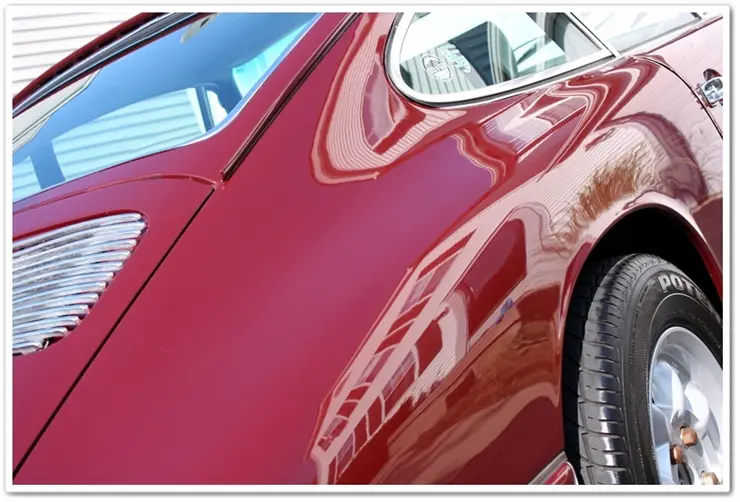
Image Source: detailedimage.com
The Verdict: A basic paint job is ideal if you are trying to sell a very old car, if you have a “beater” commuter car with severely peeling paint, or if you just need temporary protection from rust. However, without a dedicated clear coat, single-stage enamel is highly susceptible to UV damage and will likely begin oxidizing or fading within two to three years if left in the sun.
2. The Standard Mid-Range Tier (Independent Auto Body Shops)
Average Cost: $2,000 – $5,000
When most people ask, “How much does it cost to paint a car?”, this is the tier they actually want. A standard mid-range paint job is what you will find at a reputable local, independent auto body shop. The goal of this tier is to restore your vehicle to its original factory appearance.
This tier utilizes two-stage urethane paint. This means the shop sprays a colored base coat first, allows it to flash (dry slightly), and then sprays a dedicated, transparent clear coat over the top. The clear coat provides depth, shine, and crucial UV protection.
What you get:
- Proper Surface Preparation: Technicians will spend hours sanding out minor scratches, filling small dings with body filler, and smoothing out the surface. Proper prep is the foundation of a good paint job.
- Parts Removal (R&I): Instead of taping over everything, the shop will Remove and Install (R&I) key components. They will take off the door handles, side mirrors, headlights, taillights, and sometimes the bumpers. This ensures the paint wraps cleanly around the edges of the body panels, preventing peeling down the road.
- Color Matching: If you are only painting a portion of the car, the shop will use advanced spectrophotometers to exactly match your car’s aged paint, seamlessly blending the new paint into the old.
The Verdict: This is the best value for 90% of vehicle owners. It provides a durable, factory-equivalent finish that will easily last 5 to 10 years with regular washing and waxing.
3. The Premium, Showroom, and Custom Tier
Average Cost: $5,000 – $20,000+
This tier is reserved for classic car restorations, luxury vehicles, high-end sports cars, and highly customized builds. When you are paying over $10,000 for a paint job, you are paying for perfection, obsessive attention to detail, and specialized materials.
What you get:
- Block Sanding to Bare Metal: The vehicle is often stripped completely down to the bare steel or aluminum. Technicians use long sanding blocks by hand to ensure every panel is perfectly flat and free of microscopic waves or ripples.
- Full Disassembly: The car is taken apart. The engine may be removed to paint the engine bay. The doors, hood, and trunk are removed so the jambs and inner edges can be painted flawlessly.
- Multi-Stage Specialty Paints: This tier uses expensive three-stage or custom paints. This includes candy colors, heavy metallics, pearlescents, and color-shifting paints. These require exceptional skill to spray evenly.
- Cut and Buff: After the final clear coat is applied and cured, the entire car is wet-sanded by hand with ultra-fine sandpaper and then polished with a rotary buffer. This eliminates any “orange peel” texture, resulting in a surface that looks like a liquid mirror.
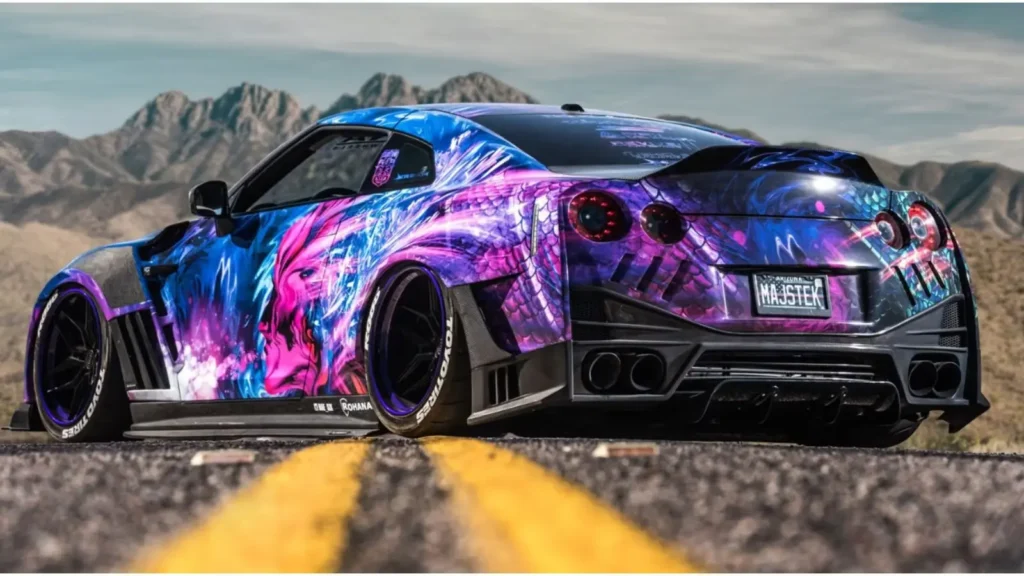
Image Source: hotcars.com
The Verdict: If you are building a car to win trophies at a car show, or if you are doing a full color change on a $100,000 luxury SUV, this is the only tier that makes sense.
Cost by Vehicle Size and Type
The size of your vehicle directly impacts both the amount of raw materials (primer, base coat, clear coat) required and the total labor hours needed to prep and spray the surface area.
Compact Cars and Small Coupes (e.g., Honda Civic, Mazda Miata): These vehicles have the lowest surface area. A standard two-stage repaint will typically run between $2,000 and $3,500.
Mid-Size Sedans and Small SUVs (e.g., Toyota Camry, Ford Escape): With four doors and a slightly larger footprint, standard repaints for this category average between $2,500 and $4,500.
Large SUVs, Trucks, and Vans (e.g., Chevy Tahoe, Ford F-150): These vehicles require significantly more paint and labor. The massive roof panels, truck beds, and tall doors mean a standard repaint will generally cost $3,500 to $6,000+. Painting the inside of a truck bed will add an additional $500 to $1,000.
Cost by Geographic Region
Labor rates in the auto body industry vary wildly depending on your location. The paint and materials cost roughly the same nationwide, but the hourly rate charged by the technicians dictates the final bill.
High Cost of Living Urban Areas (e.g., Los Angeles, New York City, San Francisco): Auto body labor rates can exceed $100 to $150 per hour. Expect to pay at the absolute top end of the ranges provided above. A standard $3,000 paint job in the midwest might cost $5,500 in coastal California.
Suburban and Mid-Sized Cities: Labor rates typically hover between $60 and $90 per hour. The estimates in the table above most accurately reflect these markets.
Rural Areas: Labor rates can drop to $45 to $60 per hour, making comprehensive paint jobs significantly more affordable, though you may have fewer highly specialized custom shops to choose from.
To see how painting compares to other major automotive maintenance expenses in your region, visit our comprehensive guide on auto costs.
Get Quotes / Find a Local Pro
Factors That Affect cost
Understanding the line items on an auto body estimate will help you figure out exactly where your money is going. If a shop quotes you $8,000 to paint your car, it is almost certainly due to a combination of the following factors.
Preparation Work and Current Condition
The golden rule of auto painting is that 90% of the work is in the preparation. Paint does not hide imperfections; it magnifies them. If your car has dents, dings, deep scratches, peeling clear coat, or rust, the shop must fix these issues before a single drop of paint is sprayed.
If your clear coat is failing (the white, flaky peeling often seen on hoods and roofs), the shop must sand the entire panel down to a stable layer, sometimes all the way to the primer. If they just spray over peeling paint, the new paint will peel right off with it. Every hour a technician spends sanding, applying Bondo (body filler), and blocking the car adds $60 to $100 to your bill.
Color Choice (Standard vs. Premium)
Not all paint colors cost the same to manufacture.
- Solid Colors (White, Black, Red): These are the most affordable paints. They are easy to mix, easy to spray, and easy to match if touch-ups are needed later.
- Metallic Paints: These contain tiny flakes of aluminum that give the paint a sparkling depth. They cost about 20% to 30% more than solid colors and require a more skilled painter to ensure the flakes lay down evenly without “tiger striping.”
- Pearlescent Paints: These contain microscopic ceramic crystals (mica) that reflect and refract light, giving the car a subtle color-shifting glow. These are expensive and complex to apply.
- Matte or Satin Finishes: Contrary to popular belief, a dull matte finish is incredibly expensive. It requires specialized clear coats that cannot be polished or buffed. If the painter makes a mistake or gets a piece of dust in the finish, they cannot sand it out; they have to respray the entire panel.
Color Change vs. Same Color Repaint
Keeping your car the exact same factory color is significantly cheaper than changing the color.
If you want to change your white car to blue, the shop cannot just paint the outside. If they do, every time you open your door, pop the hood, or open the trunk, you will see the original white paint in the door jambs and engine bay. This is known as a “closed-door” paint job, and it severely diminishes the resale value of the vehicle.
A proper color change requires the shop to completely gut the car. They must remove the doors, the interior trim, the weather stripping, and sometimes the engine to paint all the hidden metal surfaces. A full color change turns a 40-hour mid-range paint job into a 150-hour custom project, instantly doubling or tripling the cost.
Disassembly and Reassembly (R&I)
As mentioned in the quality tiers, removing parts rather than taping over them yields a superior result but costs more in labor. Removing bumpers, drop-glass windows, trim pieces, badges, and lights takes time. If a shop quotes you a higher price than a competitor, look at the estimate to see if they are billing for “R&I” (Remove and Install). If they are, you are getting a higher quality service.
Quality of Materials
Auto paint is a highly chemical-dependent product. Premium brands like PPG, Glasurit, and Axalta (formerly DuPont) cost hundreds of dollars per gallon. These top-tier paints offer better UV resistance, richer color depth, and superior longevity compared to budget brands. Furthermore, high-quality, high-solids clear coats offer much better protection against rock chips and environmental fallout than cheaper alternatives.
How to Save Money
A fresh coat of paint is a massive investment, but there are strategic ways to reduce the cost without necessarily sacrificing the durability of the final product.

Do the Prep Work Yourself (With Caution)
If you are handy and willing to put in the sweat equity, you can save thousands of dollars in labor by doing the initial prep work yourself. This includes removing the trim, bumpers, lights, and badges before driving the car to the shop.
If you are experienced, you can also tackle the sanding. You can rent a DA (Dual Action) sander and scuff the car yourself, fix minor dents with body filler, and apply primer. Warning: Always talk to your body shop first. Some shops will refuse to spray a car they didn’t prep, because if the paint peels due to your bad prep work, the customer usually blames the painter.
Stick to the Original Color
As detailed above, changing a car’s color requires painting the door jambs, under the hood, and inside the trunk to look professional. By sticking to your car’s factory color code, the shop only has to prep and spray the exterior panels. This saves dozens of hours of labor and significantly reduces the amount of paint required.
Choose a Solid, Non-Metallic Paint
If you are doing a color change on a project car, choose a standard solid color like gloss white, black, or a solid red. Metallic, pearl, and candy colors require more expensive base materials and often require an extra stage of painting, driving up the materials and labor costs simultaneously.
Opt for a Partial Repaint
Does the whole car really need to be painted? The horizontal surfaces (the hood, roof, and trunk) take the brunt of the sun’s UV rays and are usually the first to suffer clear coat failure. The vertical surfaces (the doors and fenders) often remain in excellent condition.
Instead of paying $4,000 for a full repaint, ask a body shop to just prep and paint the hood and the roof, and then perform a heavy paint correction (cut and buff) on the rest of the car. They can blend the new paint into the old, saving you a massive amount of money while completely revitalizing the vehicle’s appearance.
Bundle with Other Services
If you are taking your car into a shop, see if they offer discounts for bundled aesthetic services. For example, many shops that handle paint also handle automotive tinting. Getting your paint refreshed and your windows tinted at the same time can sometimes yield a package discount. You can read more about standalone tinting pricing in our guide: car tint cost.
Car Wrap vs Paint: Which Is Better?
In recent years, vinyl car wraps have become the go-to alternative to traditional paint jobs, especially for people looking to change the color of their vehicle. But is wrapping actually better, or cheaper, than painting?
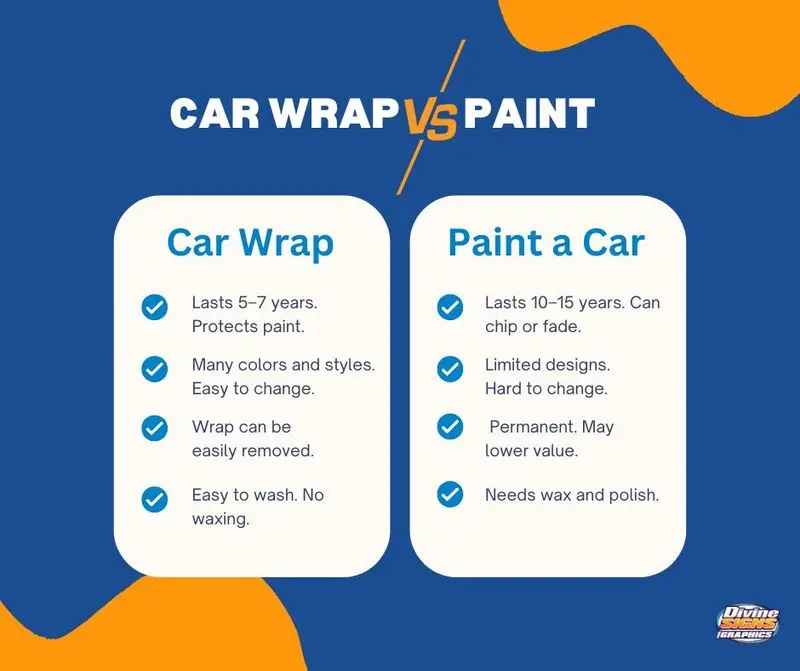
Image Source: divinesignsinc.com
The Cost Comparison
A high-quality vinyl wrap applied by a professional typically costs between $2,500 and $4,000 for a standard-sized vehicle.
- Compared to a Basic Paint Job ($500 – $1,500), a wrap is much more expensive.
- Compared to a Standard Repaint in the same color ($2,000 – $5,000), the costs are roughly identical.
- Compared to a Custom Color Change Paint Job ($10,000+), a wrap is significantly cheaper.
When to Choose a Car Wrap
You should choose a vinyl wrap if you want to completely change the color of your car, or if you want a finish that is incredibly difficult or expensive to paint (such as matte black, satin chrome, color-shift chameleon, or a complex geometric livery).
Wraps are also temporary. If you lease a car, or if you want to paint your Porsche neon green but don’t want to destroy its resale value, a wrap is the perfect solution. It protects the factory OEM paint underneath, and in 3 to 5 years, you simply peel it off to reveal the pristine original paint.
For a much deeper dive into the specific pricing structures of vinyl wraps, including material costs and lifespan, visit our dedicated guide: Car Wrap Cost.
When to Choose Traditional Paint
You should choose traditional paint if your current paint is peeling, chipping, or rusting. A vinyl wrap is not a fix for bad paint. Vinyl is essentially a giant sticker; if you apply it over peeling clear coat, the wrap will fail to adhere properly, the texture of the bad paint will show right through the vinyl, and when you try to remove the wrap later, it will rip off whatever loose paint is left.
Paint is also a permanent solution. While a premium vinyl wrap will last 5 to 7 years before the sun degrades the material, a standard mid-range two-stage paint job will easily last 10 to 15 years, and a premium paint job can last a lifetime with proper care.
Frequently Asked Questions (FAQ)
How much does it cost to fix peeling clear coat before painting?
If your clear coat is flaking, a shop cannot simply spray over it. They must sand the affected panels down to a stable base layer or bare metal. Expect clear coat stripping and leveling to add $200 to $500 per panel in labor costs before the actual primer and paint are applied.
How much does it cost to repair rust before a car is painted?
Minor surface rust can be sanded away for roughly $100 to $200 per spot. However, if the rust has eaten holes through the metal, the shop must cut out the rotted steel and weld in new patch panels. Heavy rust repair is highly specialized fabrication labor that usually runs $100 to $150 per hour and can easily add $1,000+ to your total bill.
Does a professional paint job include fixing dents, or is that a separate cost?
Most body shops quote paint and bodywork as completely separate line items. Minor dings might be filled with body filler as part of a mid-range package, but larger dents requiring paintless dent repair (PDR) or panel pulling typically cost an extra $75 to $250 per dent to fix before the painting process begins.
How much does insurance pay toward a car paint job?
Auto insurance will only pay for a paint job if the damage was caused by a covered incident, such as a collision, vandalism, or a natural event (like hail). In those cases, insurance covers the cost to restore the vehicle to its pre-loss condition, minus your deductible. Insurance will never pay for a repaint due to normal wear and tear, sun fading, or age.
What is the cost difference between single-stage and two-stage paint?
Single-stage paint (where color and gloss are mixed into one sprayable liquid) is the cheapest option, running $500 to $1,500 for the whole car. Two-stage paint (a dedicated base color coat followed by a separate protective clear coat) requires double the spraying labor and more product, pushing the cost to $2,000 to $5,000 but offering vastly superior durability.